
Discovering the World of Stenciling: Techniques and Inspirations
The stencil, an ancient and versatile technique, is today a very popular method of artistic expression, particularly in urban and contemporary art. This process allows artists to create precise and repetitive images by applying paint or ink through a cut-out design. But the stencil is not limited to a simple reproduction technique: it is a true tool for creativity and expression, allowing artists to play with shapes, colors, and messages. Let's delve into this fascinating world to understand the origins, methods, and inspiration behind the stencil.
What is a Stencil? An Accessible and Versatile Technique
Stenciling involves cutting out a design (or mask) from a material, such as cardboard, plastic, or metal, and then applying paint or ink. The result is a crisp image, created by filling in the cut-out areas. Stencils allow for the reproduction of the same design multiple times, making them particularly well-suited to street art, where the ability to quickly and easily create repetitive images is essential.
Origin and History: Used since antiquity to decorate clothing, walls, and objects, stencils have endured through the centuries to become a cornerstone of contemporary and urban art. In the 1980s, street artists like Blek le Rat in France and later Banksy in the UK popularized the use of stencils as a way to convey social and political messages in public spaces.
Accessibility: Stencils are an affordable technique, requiring only a cut-out design and spray or aerosol paint, making them accessible to both amateur and professional artists.
Stencil Techniques: From Simplicity to Complexity
Stencil creation can vary in complexity depending on the desired level of detail. From single-layer stencils to more sophisticated techniques, the possibilities are vast.
Simple single-layer stencils: This is the most basic technique, consisting of a single cut-out shape. This type of stencil is perfect for minimalist designs and simple shapes.
Multi-layer stencils: By using multiple layers of stencils, artists can layer colors and create intricate details. Each layer represents a color or part of the image, and the layers are applied one after another to create a rich and precise result.
Using textures and effects: Artists play with techniques such as shading, splattering, and gradients to add volume and depth to images. Some also use materials like sandpaper or fabrics to add texture.
Materials and Tools: What You Need to Make a Stencil
Stencil materials vary depending on the desired durability and level of detail. Here are some basic tools for creating stencils:
Cutting materials: Cardboard is inexpensive and easy to cut, but it can wear out quickly. For reusable stencils, plastic or Mylar (polyester sheet) are better because they withstand paint and repeated handling better.
Cutting tools: A precision cutter is essential for cutting out fine details in stencils. Some artists also use laser cutters to create very precise stencils.
Paints and inks: Aerosol cans and spray paint are the most commonly used in stencil art because they allow for quick and even application over large areas. Acrylic inks and brushes are also used for more detailed and controlled projects.
Stencil Inspirations: From Street Art to Contemporary Art
The stencil is a medium of expression that lends itself to a wide range of inspirations. From street artists to art galleries, stencils often convey social, political, or cultural messages, playing on the visual impact and immediacy of the technique.
Street art and socially conscious messages: Street artists often use stencils for socially engaged works, aiming to draw the public's attention to issues such as injustice, peace, or the environment. Banksy, for example, uses stencils to create works that provoke thought on politics and society.
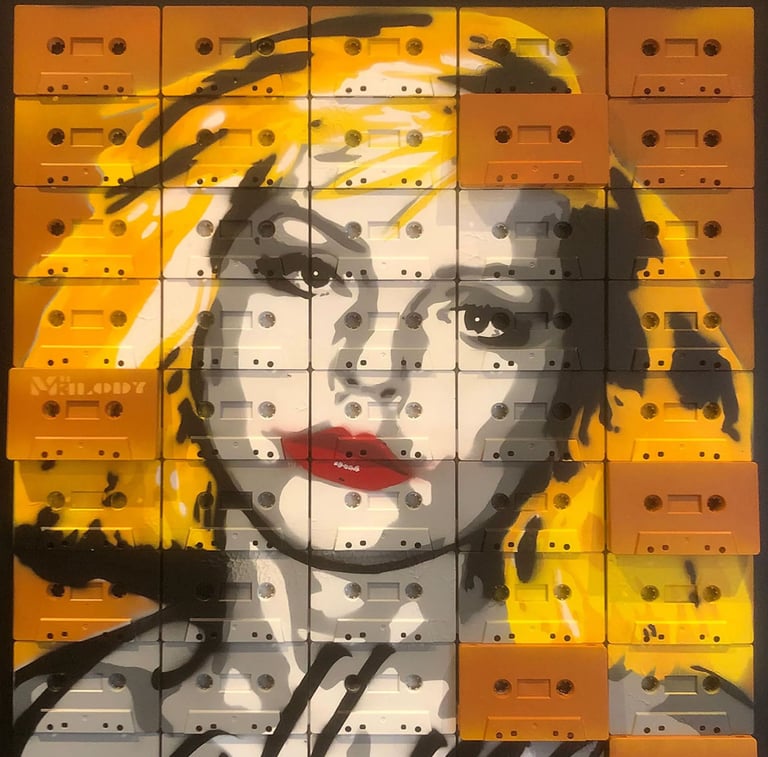
Pop art and popular culture: Stencils also allow for the reproduction of images from popular culture, paying homage to iconic figures and icons of film, music, and politics. Mister Melody, for example, uses stencils on unconventional materials such as audio cassettes, thus revisiting icons of music and pop culture.
Minimalist and abstract aesthetics: Some artists explore stencils in a more abstract form, creating geometric patterns and plays of color. This minimalist approach is often inspired by modern art movements and results in graphic and visually striking works.
Key Steps to Creating a Stencil
Creating a stencil may seem simple, but it requires some skill and precision to achieve the desired result. Here are the key steps to making a stencil:
Choosing the image: Select an image or design. For beginners, simple shapes and silhouettes are a good starting point.
Preparation and simplification: If the image is complex, simplify it by removing small details to keep only the essential outlines. Photo editing software can be helpful for this.
Cutting the stencil: Print the image on paper, then attach it to the cutting mat. Use a precision cutter to cut out the areas you want to paint.
Applying the paint: Position the stencil on the chosen surface, secure it with masking tape, and apply the paint evenly. Be careful not to overspray to prevent the paint from seeping under the stencil.
Removing the stencil: Carefully remove the stencil to reveal the image. Allow to dry and repeat the process if additional layers are needed.
Stenciling and Personal Expression: Art Within Everyone's Reach
Stencils are a technique that allows for great freedom of expression while remaining accessible. In addition to being an artistic medium, they are an excellent way for amateurs to create unique works without being seasoned artists. Stencils invite everyone to experiment, express their ideas, and leave their mark in public or private spaces.
A democratic form of expression: Used in street art, stencils allow all artists, amateur or professional, to express themselves in public spaces. The message, often impactful, speaks directly to passersby, without filters or barriers.
A tool for artistic identity: For artists who wish to develop a recognizable style, stencils are an excellent way to establish a unique and identifiable visual signature.
Conclusion
Stencils are much more than just a technique for reproducing images. They are a rich and powerful means of expression, capable of conveying messages, attracting attention, and challenging the viewer. Whether in street art or on other creative surfaces, stencils bring striking images to life, symbolizing both the freedom and accessibility of art. They continue to inspire numerous artists worldwide, inviting each of us to discover the beauty and power of this simple yet universal technique.
Home
Gallery
The artist
Workshop journal