
When Rhythm Takes Shape: Musical Energy Frozen in Matter
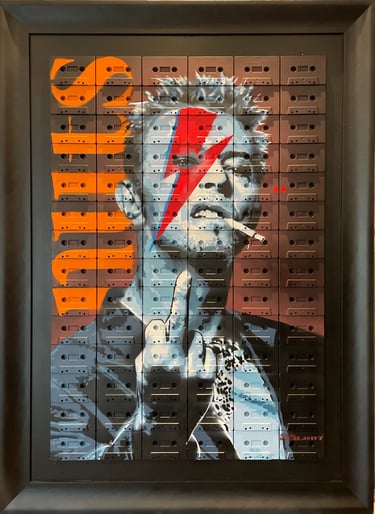
Have you ever felt a bass line so deep it seemed to alter the density of the air? Or a saxophone solo so ethereal it traced invisible curves before your eyes? For many, music is a fleeting experience. But for a new wave of artists and collectors, the line between the auditory and the visual is blurring. Welcome to the era where rhythm becomes form, and the energy of sound is captured in matter to create unique pieces imbued with history.
When Rhythm Takes Shape: Musical Energy Frozen in Matter
The first time I truly felt music in my body, it was a Santana concert. Outdoors. I was young. The guitar wasn't something you listened to, it was something you absorbed. The sound had a physical weight, a pressure on the chest that didn't ask for permission.
That memory never left me. It's probably why I'm still trying to capture that feeling, not with speakers, but with cassettes, stencils and paint.
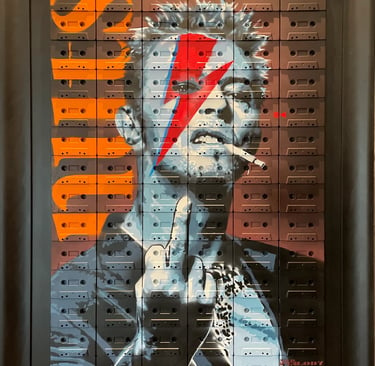
When I assemble the cassettes, I'm not thinking about abstract composition. I'm thinking about a tempo, a specific vibration. The arrangement of the cases, the angle of a stencil line, the density of a layer of paint, all of it translates something auditory into something you can touch. Not an illustration of music. An attempt to give it a body.
The medium matters as much as the subject. An audio cassette isn't neutral. It has already held sound, voice, recorded silence. When I transform it into a work, I'm not starting from nothing. I'm starting from something that has already vibrated.
Hanging one of these pieces on a wall means keeping an energy you may have felt yourself one evening, somewhere. Music disappears. The work stays.